
Safe-Bricks projects
Original project photography, case studies and before-and-after comparisons from bungaroosh, lime and traditional-building work across Brighton, Hove and East Sussex.
How we document a project
These are our own projects, photographed by us. Most are traditional solid-wall buildings in Brighton and Hove — Regency and Victorian terraces built in bungaroosh, flint and soft brick — where an earlier cement repair or damp-proofing treatment had failed. Each case study records the same four things, so you can see the reasoning as well as the result.
For the construction behind most of these repairs, read What Is Bungaroosh? and Why Lime Render Matters.
- The initial problem
- What the owner saw — damp, cracking, hollow or failing render, loose flint or brick.
- The investigation
- What the wall was actually built from and where the moisture or movement was coming from.
- The agreed approach
- Why a particular repair was chosen, and what was retained rather than replaced.
- Materials and outcome
- The lime mortars, renders and finishes used, with completed photography.
A record of completed specialist work
Each project documents the diagnosed problem, the investigation carried out, and the reinstatement approach — presented with original photography.
15 College Terrace
Failed lath and plaster through the hallway, living room and top-floor bedrooms, mould in the top floor and a damp living room wall — stripped back, treated, structurally repaired, lime-plastered throughout and eight original sash windows restored.
View case study28 Brunswick Terrace
Cracked, delaminating cement render on the rear of a Grade I listed terrace was removed on a surveyor's recommendation, revealing a 2m² void in the bungaroosh behind it — rebuilt in hydraulic lime with salvaged flints via basement and four-lift scaffold access.
View case study
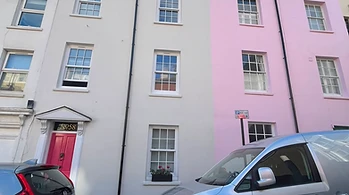
58 & 60 Brunswick Street West
Widespread render failure across two adjoining facades — extensive cracking, delamination and moisture-related failure of the existing cement render coat, investigated at high level via scaffold.
View case studyNot sure where to start?
Send us photographs of the area of concern. It is the most straightforward first step — we will look at what you can see and advise on the appropriate next steps.