
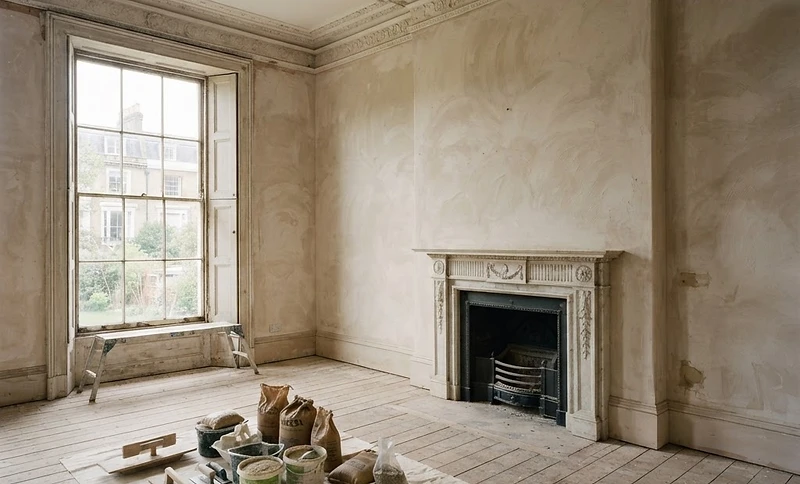
Heritage Property Restoration Specialists in Brighton and Hove
Brighton and Hove has an exceptional collection of older buildings, but repairing them successfully requires more than reproducing their historic appearance.
The construction itself needs to be understood.
Traditional properties can contain solid masonry, bungaroosh, flint, soft brick, lime mortar, lime render, lime plaster and combinations of materials introduced during different periods of alteration.
Safe-Bricks specialises in the investigation, repair and renovation of these buildings, with particular expertise in bungaroosh, lime and traditional solid-wall construction.
Our objective is not to make every building old-fashioned again. It is to retain sound historic fabric where practical, correct genuine defects and introduce new work in a way that respects the existing building.
Heritage Buildings Are Not Modern Buildings With Old Features
One of the most important differences between many older buildings and modern construction is the way the building fabric is assembled.
Traditional walls are often:
- Solid rather than cavity construction
- Built using relatively soft masonry
- Bedded in lime mortar
- Irregular internally
- Finished with lime-based render or plaster
- Altered repeatedly over many decades
Historic England notes that traditional construction commonly uses materials capable of absorbing, storing and later releasing moisture. This is one reason repairs need to consider the behaviour of the complete wall rather than only its visible surface.
Modern materials can still be appropriate within an older property.
The question is where and how they are used.
Understanding the Existing Building Comes First
Before specifying substantial repair work, Safe-Bricks aims to establish:
- How the wall is constructed
- What materials are present
- Which elements are original
- What later repairs have been introduced
- Whether those repairs remain serviceable
- Why deterioration has occurred
- Whether moisture or structural movement is active
- What should genuinely be removed
- What can reasonably be retained
This avoids unnecessary intervention.
A heritage approach should not mean stripping every wall back simply because a modern material is present.
Sound historic fabric — and sound later work that is performing satisfactorily — should not be disturbed without a reason.
Bungaroosh Restoration
Bungaroosh is particularly associated with Brighton and Hove's historic building stock.
It is an irregular mixed masonry that can contain combinations of:
- Flint
- Brick
- Brick fragments
- Stone
- Rubble
- Lime-bound material
- Other locally available masonry
Because its composition varies, repair work should follow the actual condition of the wall.
Safe-Bricks undertakes:
- Local bungaroosh repairs
- Consolidation
- Re-bedding loose masonry
- Lime mortar repair
- Substantial wall rebuilding
- Repairs around openings
- Structural repairs
- Render and plaster reinstatement
Lime Mortar Repairs
Traditional lime mortar is generally softer and more accommodating than many dense cement-rich mortars.
Its role goes beyond simply holding masonry together.
The mortar forms part of the way the wall manages movement and moisture.
Where lime mortar has deteriorated, repairs may involve:
- Removing genuinely failed material
- Retaining sound historic mortar where practical
- Repointing defective joints
- Re-bedding loose masonry
- Repairing voids
- Reconstructing localised areas
Historic England advises that comprehensive repointing is rarely necessary simply for its own sake and that sound historic mortar should generally be left undisturbed.
This aligns with our approach: repair what requires repair rather than treating wholesale replacement as the default.
Lime Rendering
External render is one of the principal protective layers on many traditional buildings.
Where lime render is appropriate, it can provide weather protection while retaining greater drying potential than many dense modern alternatives.
However, simply specifying “lime render” is not enough.
The system still needs to account for:
- Substrate
- Exposure
- Existing masonry
- Existing moisture
- Coat thickness
- Detailing
- Curing
- Final decoration
Before rendering begins, defective masonry and active water-entry defects should be addressed.
Lime Plastering
Internal lime plaster remains appropriate for many traditional solid walls.
It can be particularly useful where the wall itself is lime-bound and the repair strategy seeks to retain the drying characteristics of the original construction.
Safe-Bricks can undertake:
- Removal of failed plaster where justified
- Masonry preparation
- Lime base coats
- Intermediate coats where required
- Fine lime finishes
- Local repairs
- Reveals
- Repairs following structural work
Not every wall in an old building necessarily needs lime plaster.
Modern partitions, dry internal walls and later construction may appropriately use modern plaster systems.
The specification should follow the construction.
Damp in Heritage Properties
Damp is one of the areas where older buildings are most frequently misunderstood.
Visible symptoms can include:
- Staining
- Mould
- Blistering paint
- Damaged plaster
- Salts
- Loose render
- Persistent musty conditions
But these symptoms do not identify the cause.
Potential sources include:
Potential sources include:
- Roof defects
- Leaking gutters
- Failed downpipes
- Defective render
- Open masonry joints
- Plumbing leaks
- High ground levels
- Poor ventilation
- Condensation
- Defective detailing around openings
Brighton & Hove City Council's current guidance for listed buildings specifically advises that the cause of damp should first be identified and, as far as possible, removed.
That is also the principle behind the Safe-Bricks approach.
A Moisture-Meter Reading Is Not a Diagnosis
Handheld moisture meters can be useful investigative tools.
They are not a complete diagnosis.
An elevated reading does not, by itself, establish whether the building is affected by:
- Rainwater penetration
- Condensation
- Plumbing leakage
- Ground-related moisture
- Hygroscopic salts
- Another source
The reading needs to be interpreted alongside the construction, location, condition and pattern of deterioration.
We therefore do not specify major remedial work solely because a meter produces a high reading.
Repair the Moisture Source First
Where water is actively entering the building, that defect should normally be addressed before replastering or redecorating.
A typical sequence may be:
- 1Identify the construction.
- 2Determine the likely moisture source.
- 3Repair active defects.
- 4Assess the condition of existing materials.
- 5Remove defective or incompatible finishes where justified.
- 6Repair the underlying masonry.
- 7Reinstate suitable render or plaster.
- 8Allow appropriate curing and drying.
- 9Apply compatible decoration.
This prevents expensive finishes being installed over an unresolved defect.
Cement in Older Buildings
The relationship between cement and traditional construction needs to be described accurately.
Cement is not automatically harmful simply because a building is old.
Modern cementitious materials may perform perfectly well in appropriate locations.
Problems can arise where very hard, dense or rigid materials are applied to significantly softer traditional masonry in circumstances where their properties contribute to:
- Cracking
- Local masonry damage
- Reduced drying
- Loss of surrounding softer material
- Difficult future removal
The decision to remove an existing cement-rich repair should therefore be based on its condition and effect on the building.
We do not advocate indiscriminate removal.
Removing Incompatible Materials
Where removal is justified, the work itself can present risks.
Hard render or plaster can sometimes be stronger than:
- Soft brick
- Bungaroosh
- Historic mortar
- Fragile wall edges
Aggressive removal can damage the original building fabric.
The objective should therefore be controlled removal with the least reasonable loss of sound material.
This is particularly important with bungaroosh.
Flint Buildings
Flint is another characteristic material found throughout Brighton and Sussex.
Repairs can require consideration of:
- Existing lime mortar
- Flint condition
- Wall construction
- Pointing
- Previous cement repairs
- Associated brick dressings
- Water penetration
- Render where present
The appearance of new pointing is important, but its physical relationship with the surrounding masonry matters as well.
Overly hard pointing can concentrate weathering into softer adjacent material.
Brick in Period Properties
Older bricks can be substantially softer than modern engineering or facing bricks.
Where repairs are needed, consideration should be given to:
- Existing brick type
- Mortar
- Weathering
- Previous repairs
- Replacement brick compatibility
- Joint profile
- Water exposure
Replacing a soft historic brick with a much harder unit may not always be appropriate simply because the new brick is stronger.
Structural Repairs in Heritage Buildings
Older buildings can be structurally altered successfully, but the existing construction needs to be understood before demolition begins.
Structural projects can include:
- New openings
- Enlarged openings
- Steel beam installation
- Wall rebuilding
- Failed lintel repairs
- Repairs around floor bearings
- Local structural masonry replacement
Where structural engineering is required, Safe-Bricks carries out the construction work in accordance with the relevant design.
Traditional mixed masonry should not automatically be assumed to provide the same bearing or fixing conditions as modern blockwork.
Windows and Openings
Deterioration often occurs around windows and doors because these areas concentrate several materials and details in one location.
Potential defects include:
- Failed render
- Cracked reveals
- Defective sills
- Water penetration
- Loose plaster
- Masonry deterioration
- Failed perimeter detailing
- Structural cracking
We assess the opening and surrounding wall together rather than simply decorating over visible damage.
Period Features
Heritage restoration is not limited to structural wall repair.
Projects can also involve careful work around:
- Sash windows
- Cornices
- Ceiling details
- Traditional fireplaces
- Timberwork
- Original plaster
- Decorative masonry
- Historic openings
Where original features remain serviceable, repair and retention should be considered before unnecessary replacement.
Traditional Materials Should Not Be Used as Decoration
A heritage repair is not automatically successful because lime, timber or another traditional material has been specified.
The material needs to perform correctly in its location.
Good conservation work involves understanding:
- Why the original material was used
- What condition it is in
- What caused the deterioration
- Which replacement is compatible
- How new and existing materials will interact
The objective is not simply to make a modern repair look historic.
Conservation Versus Refurbishment
Not every older property needs to be treated as a museum.
Homes need to function.
New kitchens, bathrooms, electrical systems, heating, insulation and other modern improvements can often be incorporated successfully.
The important question is how those changes interact with the significant existing fabric.
Safe-Bricks aims to distinguish between:
- Material worth conserving
- Defective fabric requiring repair
- Later alterations that can remain
- Later alterations that are causing problems
- Areas where modern construction is appropriate
Listed Buildings
A listed building has additional legal protection.
Brighton & Hove City Council states that Listed Building Consent is required for works that affect the building's special character, including relevant demolition, alterations and extensions, and that some non-like-for-like repairs can also require consent.
This can apply to external and internal work.
Projects should therefore establish the consent position before relevant work begins.
Safe-Bricks does not treat the need for Listed Building Consent as something to resolve after construction has started.
Conservation Areas
Conservation areas protect the particular architectural or historic character of an area.
Brighton & Hove City Council advises that even comparatively minor external changes can require planning consideration, particularly where permitted development rights have been restricted.
This can affect work such as:
- Windows
- Doors
- Roof alterations
- External finishes
- Extensions
- Changes to elevations
Requirements vary according to the property and conservation area.
Heritage Statements
Where proposals affect a heritage asset or its setting, a heritage statement may be required as part of the planning or consent process.
Brighton & Hove states that heritage statements should accompany most applications where a heritage asset or its setting is affected.
The need and level of detail depend on the proposed work.
Renovating a Heritage Property
A larger heritage renovation may involve:
- Structural repairs
- Bungaroosh restoration
- Lime rendering
- Lime plastering
- Electrical alterations
- Plumbing
- Heating
- Kitchen renovation
- Bathroom renovation
- Joinery
- Flooring
- Decorating
The challenge is coordinating these trades without allowing one part of the renovation to undermine another.
For example, there is little benefit in carefully reinstating a lime wall system and then immediately applying an unsuitable final finish over it.
Decoration After Traditional Repairs
Decoration is the final layer of the wall system.
Where lime render or plaster has been selected specifically to maintain greater drying potential, the chosen paint should be compatible with that objective.
Suitable finishes may include appropriate:
- Mineral paints
- Lime-based coatings
- Other vapour-permeable systems
depending on the substrate and specification. The correct product should be selected for the actual wall rather than simply because it is marketed for heritage buildings.
Safe-Bricks' Heritage Restoration Approach
Our normal sequence is:
- 1Understand the building.
- 2Identify the construction and significant materials.
- 3Investigate the cause of deterioration.
- 4Repair active structural or moisture defects.
- 5Retain sound fabric wherever practical.
- 6Remove defective or inappropriate material where justified.
- 7Repair the underlying masonry.
- 8Reinstate materials compatible with the existing construction.
- 9Allow appropriate curing and drying.
- 10Complete with suitable finishes.
- 11Maintain the building so defects are addressed before they become major failures.
This is the central principle behind our traditional-property work.
Maintenance Matters
Many expensive heritage repairs begin with relatively small maintenance defects.
Examples include:
- Blocked gutters
- Leaking downpipes
- Failed sealant
- Cracked render
- Open joints
- Defective flashings
- Failed roof coverings
Water is one of the principal causes of deterioration in historic building materials, which makes maintenance of the building envelope particularly important.
Early repair can prevent a relatively minor defect developing into significant masonry or internal-finish damage.
Choosing a Heritage Building Specialist in Brighton
When appointing somebody to work on an older building, useful questions include:
- What is the wall actually constructed from?
- What has caused the deterioration?
- What original material can be retained?
- Why is removal necessary?
- Which mortar will be used?
- Which render or plaster system is proposed?
- Why is that system suitable?
- How will moisture be managed?
- How will hard existing finishes be removed safely?
- Are structural calculations required?
- Does the work need consent?
- What final coating will be applied?
A contractor should be able to explain not only what they intend to use, but why.
Heritage Property Restoration in Brighton and Hove
Safe-Bricks provides specialist repair and renovation services for Brighton and Hove's traditional buildings.
Our work includes:
- Bungaroosh repairs
- Lime mortar repairs
- Traditional masonry repair
- Lime rendering
- Lime plastering
- Moisture investigation
- Structural alterations
- Period-property repairs
- Renovation and associated building work
Looking for a Heritage Property Restoration Specialist in Brighton and Hove?
If your property contains bungaroosh, flint, lime or other traditional construction — or you are unsure what materials are present — send Safe-Bricks photographs for an initial review.
Useful photographs include:
- The complete elevation
- Internal and external views of affected walls
- Exposed masonry
- Failed render or plaster
- Cracking
- Windows and openings
- Roof junctions
- Gutters and downpipes
- Ground levels where moisture is involved
- Original period features affected by the proposed work
If you already have surveys, structural drawings, planning information or Listed Building Consent documents, these can also help us understand the project.
Photographs can provide useful initial information, but significant structural, moisture or heritage issues may require a site inspection before the repair specification is confirmed.
Not sure where to start?
Send us photographs of the area of concern. It is the most straightforward first step — we will look at what you can see and advise on the appropriate next steps.